Profil pays
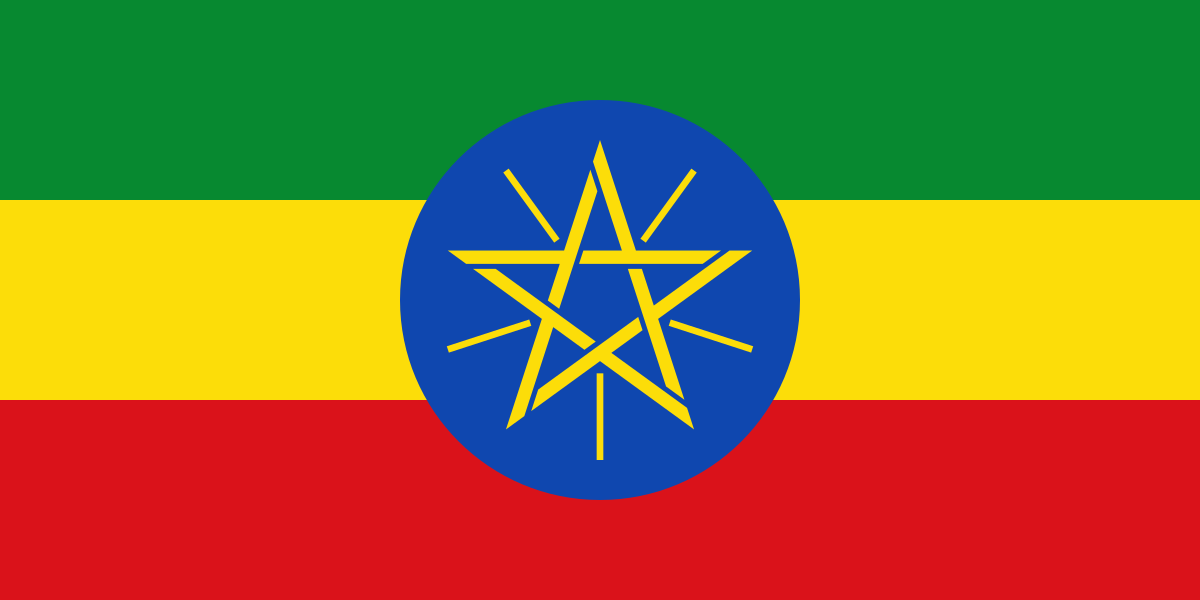 Éthiopie
 : son économie, les opportunités ouvertes en ce moment et les acteurs qui y font des affaires.
- Appels d'offres, appels à propositions et programmes ouverts
- 28Voir les ouverts
- Attributions de marchés répertoriées
- 16 933Attributions
- Entreprises répertoriées
- 776
- Transactions suivies
- 3
Ethiopia is Africa's second-most populous country and one of the fastest-growing economies on the continent, with average GDP growth exceeding 9% over the past decade. The economy is driven by agriculture (coffee is the world's birthplace of Arabica), a rapidly expanding manufacturing sector focused on textiles and garments, and massive infrastructure investments.
The country is undergoing significant economic reforms, including the landmark decision to float the birr in July 2024 and the launch of the Ethiopian Securities Exchange (ESX) in 2024, opening capital markets for the first time. The planned partial privatization of Ethio Telecom (40+ million subscribers) and the entry of Safaricom Ethiopia are transforming the telecom sector.
Ethiopian Airlines is Africa's largest and most profitable airline, serving as a major continental hub. The Grand Ethiopian Renaissance Dam (GERD) on the Blue Nile will be Africa's largest hydroelectric plant upon completion.
Aperçu
Indicateurs de la Banque mondiale Comparer avec un autre pays
Préparation climatique Classement complet
Mode de calcul
Capacité d'adaptation, c'est-à-dire la capacité à absorber la finance climatique et à s'adapter, selon la dimension de préparation du cadre ND-GAIN, à partir d'indicateurs mesurés uniquement. Ce n'est pas une mesure des émissions ni de la vulnérabilité physique au climat.
- Accès à l'énergie (30 %) : Banque mondiale, accès à l'électricité (% de la population). Le signal le plus spécifiquement lié au climat et à l'énergie dont nous disposons : ODD 7 et transition vers une énergie propre.
- Préparation de la gouvernance (20 %) : Transparency International, indice de perception de la corruption (0-100). Préparation de la gouvernance selon ND-GAIN : la capacité à gouverner et à déployer la finance climatique. Plus le score est élevé, moins la corruption est perçue.
- Préparation humaine (20 %) : PNUD, indice de développement humain (0-1). Préparation sociale selon ND-GAIN : la capacité d'adaptation de la population.
- Préparation économique (15 %) : Banque mondiale, PIB par habitant (USD courants), dernière année mesurée. Préparation économique selon ND-GAIN : la capacité à financer l'adaptation. Notée par rapport à l'ensemble des pays couverts.
- Maturité numérique (15 %) : Banque mondiale, personnes utilisant Internet (% de la population). Systèmes d'information pour l'alerte précoce et l'adaptation.
Un pays n'est noté que si au moins 4 des cinq indicateurs sont disponibles. Les sous-scores sont pondérés puis renormalisés sur les indicateurs présents ; rien n'est estimé pour un indicateur absent.
Repères
Secteurs clés
Commerce
Exportations : 3,21 Md $ (2024)
5,5 % vers les autres pays africains
Principaux partenaires à l'exportation
Principaux produits exportés (SH 4)
Par chapitre du SH
Importations : 7,22 Md $ (2024)
4,6 % en provenance des autres pays africains
Principaux partenaires à l'importation
Principaux produits importés (SH 4)
Par chapitre du SH
Source : CEPII BACI (version 202601, mise à jour du 22 janvier 2026), Etalab 2.0 (licence). Biens uniquement, SH 2022, USD courants, 2024. Agrégation : allbusiness.africa.
Finance et marchés de capitaux
Principales banques
Réglementation et fiscalité
Talents
Ressources
Les liens s'ouvrent dans un nouvel onglet.
Annuaire des entreprises (776)
Tout afficherMakiva GC
EntrepriseZerihun Agricultural Input Supplier
EntrepriseAlamerew Derese
EntrepriseAshenafie Bkele
EntrepriseShumeye Mamo
EntrepriseSelamiwit Workeneh
EntrepriseFraol Adbdi and Therir Freinds
EntrepriseBarnabas Furniture
EntrepriseHana and Mande Computer Supply
EntrepriseTafesse Mamo GWWC
EntrepriseDawa Construction and Trading
EntrepriseNational Trading PLC
EntrepriseTransactions récentes (3)
Toutes les transactionsAttributions de marchés
Tout afficherUNIVERSITY OF GONDAR*GONDER UNIVERSITY UOG: INTERNATIONAL HIGHER EDUCATION CAPACITY BUILDING: SOCIAL INCLUSION AND ENERGY MANAGEMENT FOR INFORMAL URBAN SETTLEMENTS
X - DEVCO - Directorate-General for International Cooperation and Development
THE JOINT MONITORING AND EVALUATION COMMISSION: SUPPORT TO SOUTH SUDAN PEACE AGREEMENT
X - DEVCO - Directorate-General for International Cooperation and Development
THE JOINT MONITORING AND EVALUATION COMMISSION: SUPPORT TO SOUTH SUDAN PEACE AGREEMENT
X - DEVCO - Directorate-General for International Cooperation and Development
ETHIOPIAN DEVELOPMENT RESEARCH INSTITUTE*EDRI: SITUATION ANALYSIS OF THE EIGHT GEOGRAPHICAL CLUSTERS AND DEVELOPMENT OF STRATEGY DOCUMENT UNDER THE EU RESILIENCE BUILDING PROGRAM IN ETHIOPIA (RESET)
X - DEVCO - Directorate-General for International Cooperation and Development