
South Sudan
Republic of South Sudan
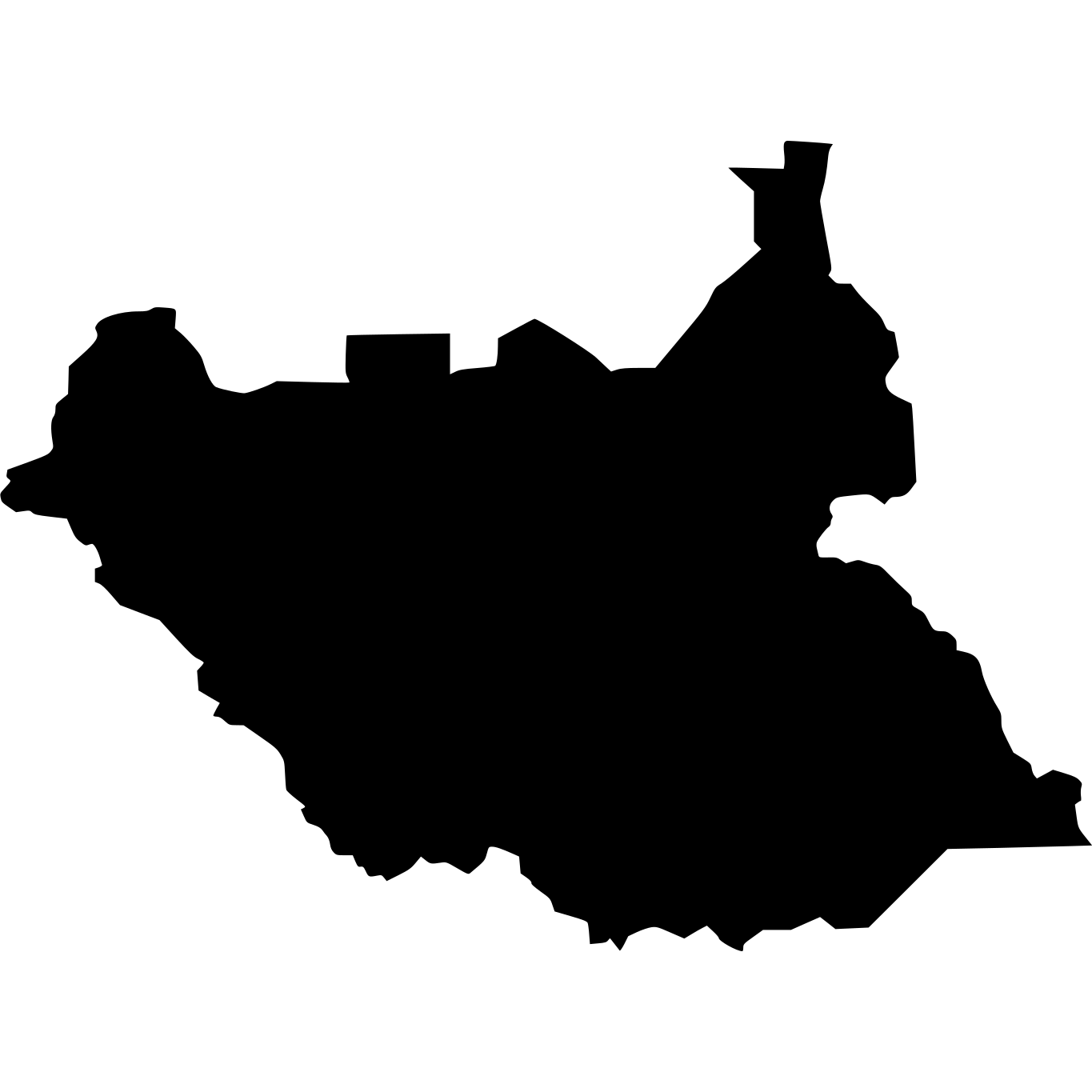
South Sudan is the world's youngest nation (independent 2011) and is heavily dependent on oil production, which accounts for nearly all government revenue and exports. Ongoing civil conflict since 2013 has devastated the economy and displaced millions. Oil production (primarily from the Unity and Upper Nile states) has recovered partially but remains below pre-conflict levels. The country has significant agricultural potential (one of Africa's largest areas of arable land) and untapped mineral resources. Business operations are extremely challenging due to conflict, weak institutions, and infrastructure deficits.
Snapshot
World Bank Indicators Compare with another country
Climate Readiness Full ranking
How this is computed
Adaptive capacity to absorb climate finance and adapt, following the readiness dimension of the ND-GAIN framework, from measured indicators only. It is not a measure of emissions or physical climate vulnerability.
- Energy access (30%): World Bank, access to electricity (% of population). The single most climate and energy specific signal held: SDG 7 and the clean-energy transition.
- Governance readiness (20%): Transparency International, Corruption Perceptions Index (0-100). ND-GAIN governance readiness: the capacity to govern and deploy climate finance. Higher is cleaner.
- Human readiness (20%): UNDP, Human Development Index (0-1). ND-GAIN social readiness: the adaptive capacity of the population.
- Economic readiness (15%): World Bank, GDP per capita (current US$), latest measured year. ND-GAIN economic readiness: the capacity to finance adaptation. Scored relative to the covered set.
- Digital readiness (15%): World Bank, individuals using the Internet (% of population). Information systems for early warning and adaptation.
A country is scored only when at least 4 of the five indicators are held. Sub-scores are weighted and renormalised over the indicators that are present; nothing is estimated for one that is absent.
Country Facts
Focus Sectors
Regulations & Taxes
Business Directory (61)
View AllAG SOUTH SUDAN
BusinessJUBA AUTO COMPANY
BusinessCITY HOUSE FURNITURE LTD
BusinessIPTECH LIMITED
BusinessSMART NETWORK
BusinessREALITY HOME TECHNOLOGY CO. LTD
BusinessGLOBAL LINKS AUTO COMPANY
BusinessNimule National Park
Non-profitSouth Sudan's oldest park
Boma National Park
Non-profitSecond-largest animal migration
Luol Deng Foundation
Non-profitNBA star's foundation
South Sudan Basketball Federation
Non-profitNation of basketball giants
Bright Stars of South Sudan
Non-profitSouth Sudan national team
Tenders
View AllProcurement of Dignity Kits for women and girls
Ministry of Gender,Child and Social Welfare
Re-Tender For Procurement of Soil testing Laboratory Equipment for Juba University CNRES and Dr. John Garang Memorial University of Science and Technology, CRAFT Project.
FAO
Supply of Media Storage Devices to UNMISS in South Sudan
UN Secretariat
Supply and Installation of a Water Supply Distribution System for Melut Municipal Hospital - Melut Town Water Project, South Sudan
IOM