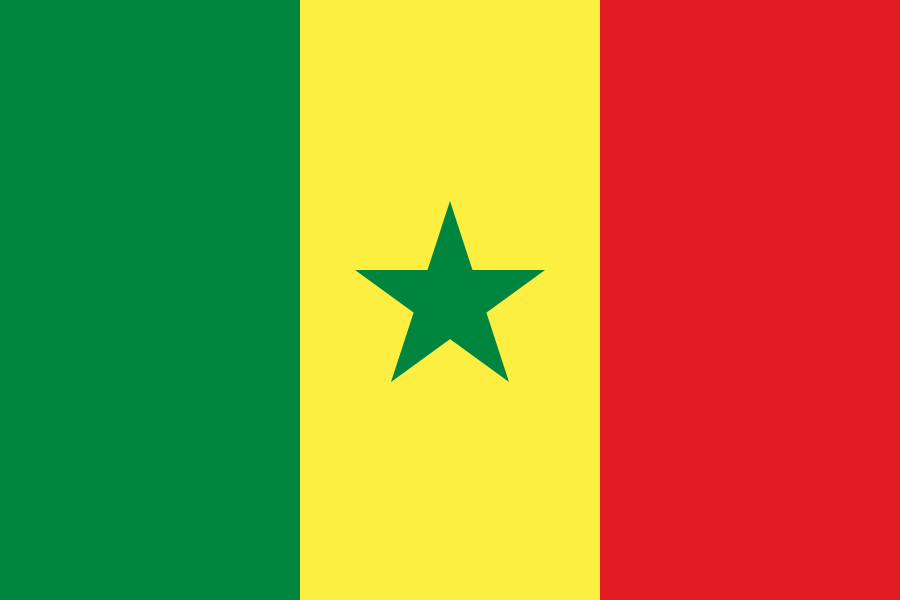
Senegal
Republic of Senegal
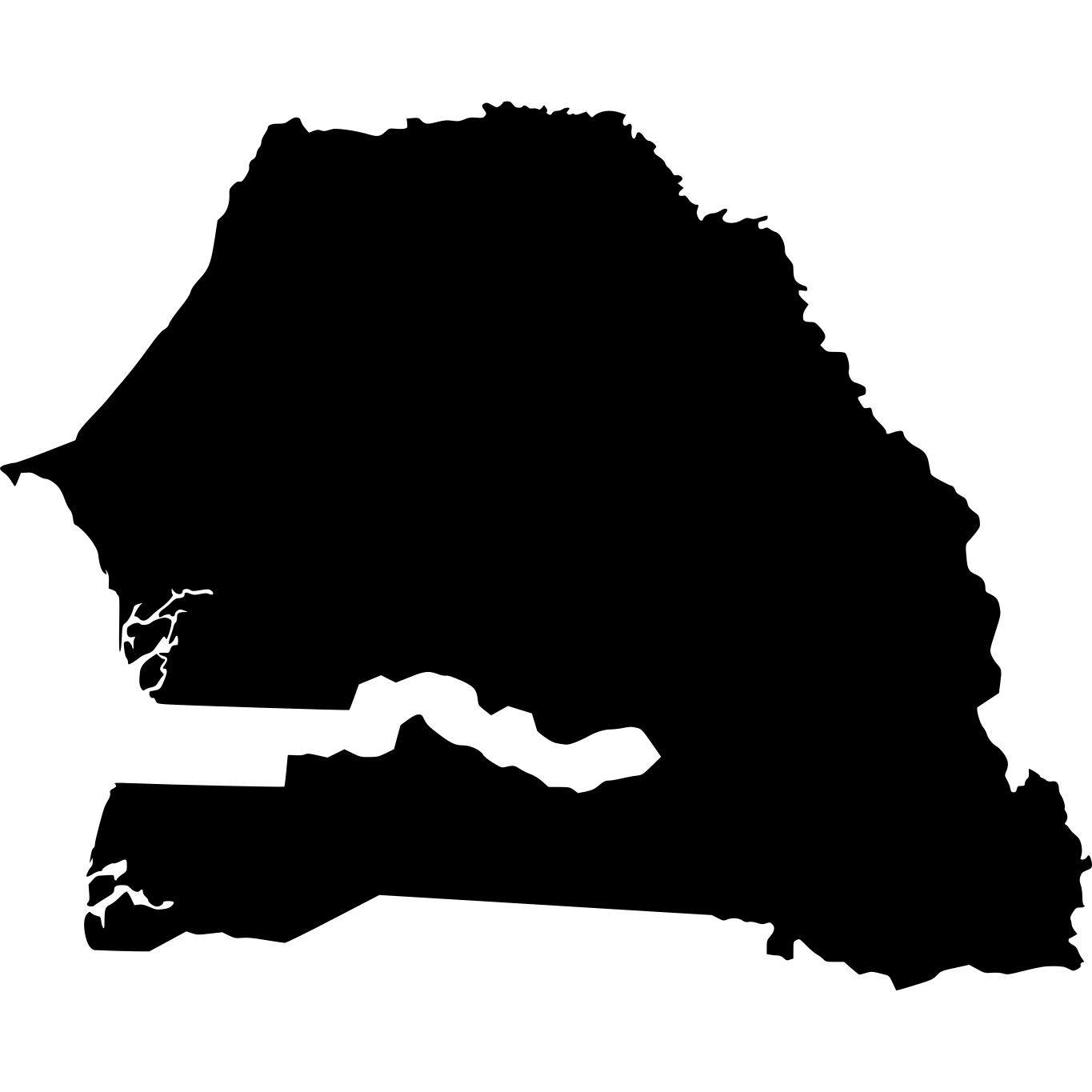
Senegal is one of West Africa's most stable democracies and fastest-growing economies. The country is on the verge of a major economic transformation with the imminent start of oil and gas production from the Sangomar field (operated by Woodside Energy) and the Greater Tortue Ahmeyim (GTA) LNG project (shared with Mauritania).
Dakar is a major business hub for francophone West Africa, hosting the regional offices of many international organizations and multinationals. The Diamniadio new city project, the Blaise Diagne International Airport, and the TER commuter rail represent significant infrastructure investments.
President Bassirou Diomaye Faye (elected March 2024) has signaled a focus on economic sovereignty, renegotiation of natural resource contracts, and youth employment. Senegal benefits from CFA franc zone currency stability and a well-educated workforce.
Snapshot
World Bank Indicators Compare with another country
Climate Readiness Full ranking
How this is computed
Adaptive capacity to absorb climate finance and adapt, following the readiness dimension of the ND-GAIN framework. Built only from measured values already held on each country profile. It is not a measure of emissions or physical climate vulnerability, which the platform does not yet hold.
- Energy access (30%) — World Bank, access to electricity (% of population). The single most climate and energy specific signal held: SDG 7 and the clean-energy transition.
- Governance readiness (20%) — Transparency International, Corruption Perceptions Index (0-100). ND-GAIN governance readiness: the capacity to govern and deploy climate finance. Higher is cleaner.
- Human readiness (20%) — UNDP, Human Development Index (0-1). ND-GAIN social readiness: the adaptive capacity of the population.
- Economic readiness (15%) — World Bank, GDP per capita (current US$), latest measured year. ND-GAIN economic readiness: the capacity to finance adaptation. Scored relative to the covered set.
- Digital readiness (15%) — World Bank, individuals using the Internet (% of population). Information systems for early warning and adaptation.
A country is scored only when at least 4 of the five indicators are held. Sub-scores are weighted and renormalised over the indicators that are present; nothing is estimated for one that is absent.
Country Facts
Focus Sectors
Regulations & Taxes
Business Directory (218)
View AllCALYPSO GROUP
BusinessGEOCONSULT INTERNATIONAL
BusinessPETROSEN
BusinessCABINET AZ CONSULTING (AZC SARL)
BusinessCARREFOUR DES MÉTIERS DU MÉTAL ET DU GÉNIE CIVIL
BusinessCOREAL
BusinessCOFT GROUP CG
BusinessE.GE.COM
BusinessIRRI AFRIQUE
BusinessHYDROCONSULT INTERNATIONAL
BusinessPRINT IMPACT
BusinessIMS PHARMA
BusinessRecent Deals (7)
View All DealsTenders
View AllContrôle et Supervision de la construction d’aménagements connexes (salles de classe, poste de santé, marchés, PTFM, etc…) phase 2
AGEROUTE
Realisation d'une série d'émission TV sur l'inclusion en Afrique
UNICEF
Achat de 34 Cartouches Toner Canon NPG – 88L
FAO
LRFQ-2026-9206686 la conception, la fourniture et la pose de panneaux de sécurité, de plans d’évacuation/intervention et de panneaux d’identification de places de parking pour la maison des nations un
UNICEF