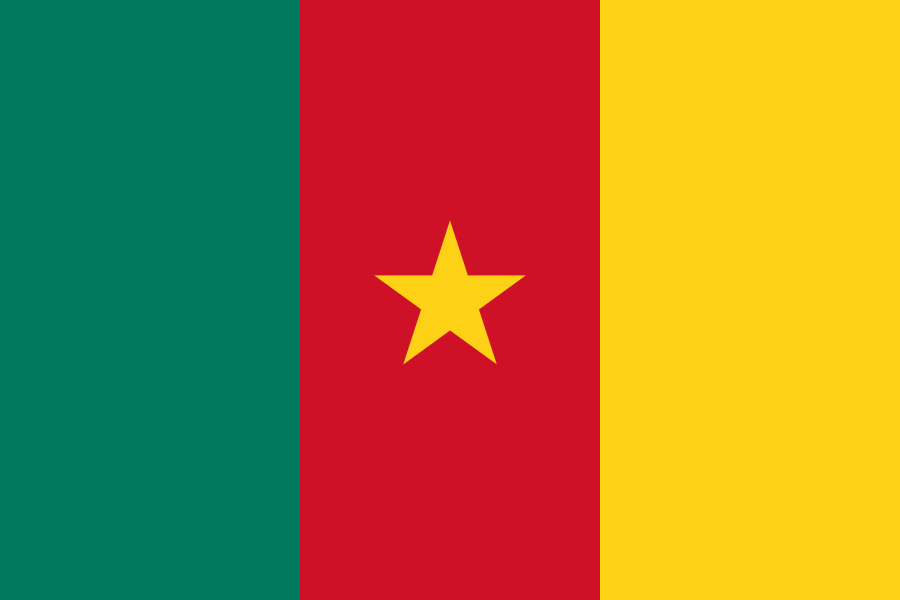
Cameroon
Republic of Cameroon
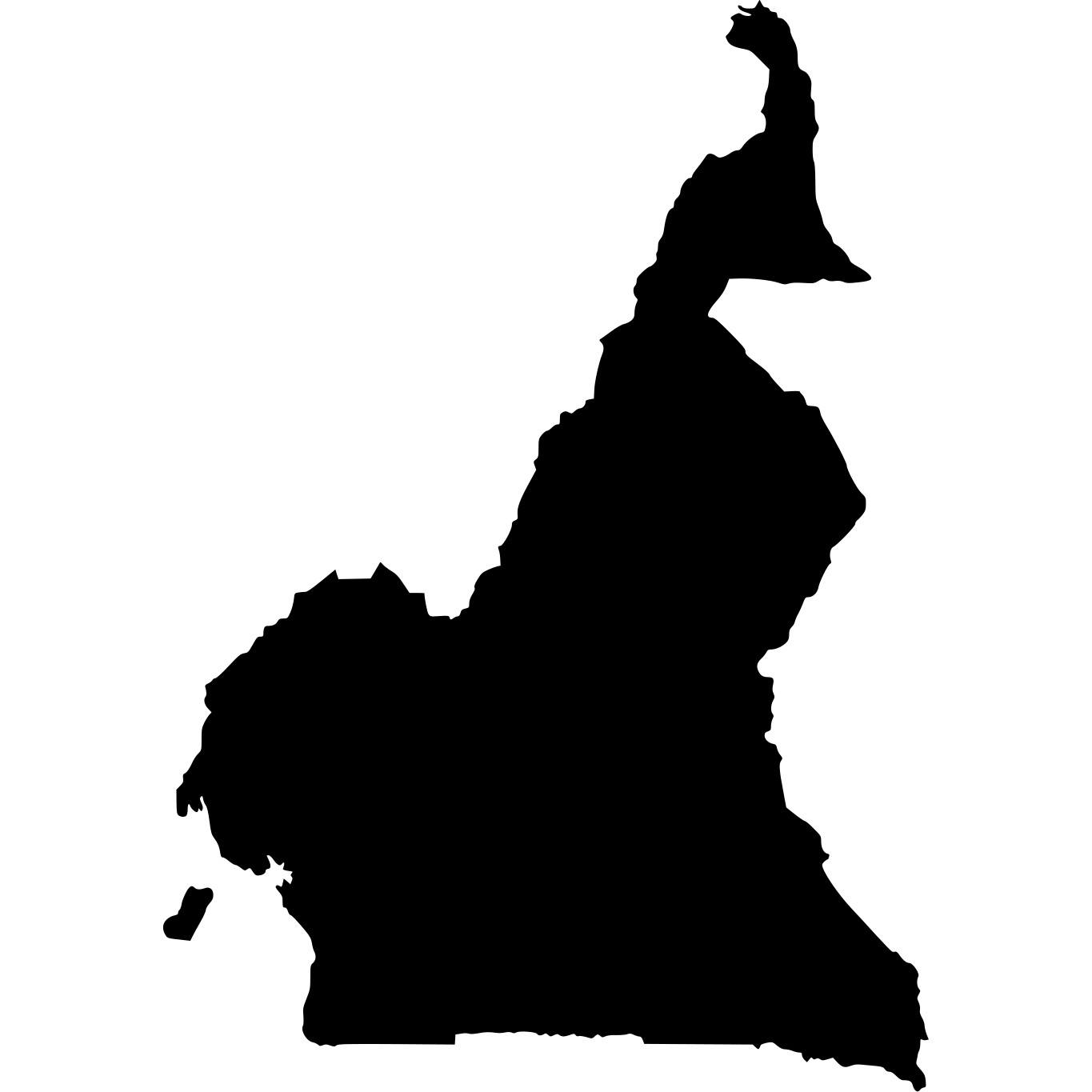
Cameroon is Central Africa's largest economy and the region's most diversified, often called "Africa in miniature" for its geographic, cultural, and economic diversity. The economy spans oil production, agriculture (cocoa, coffee, bananas, cotton), forestry, and a growing services sector.
The country is the economic anchor of the Central African Economic and Monetary Community (CEMAC) and benefits from both Francophone and Anglophone business cultures. The deep-water port of Douala serves as the primary trade gateway for landlocked Chad and Central African Republic.
Challenges include Anglophone-region instability, Boko Haram-related security concerns in the Far North, aging infrastructure, and governance issues. The government's National Development Strategy 2020-2030 targets industrialization and structural transformation.
Snapshot
World Bank Indicators Compare with another country
Climate Readiness Full ranking
How this is computed
Adaptive capacity to absorb climate finance and adapt, following the readiness dimension of the ND-GAIN framework. Built only from measured values already held on each country profile. It is not a measure of emissions or physical climate vulnerability, which the platform does not yet hold.
- Energy access (30%) — World Bank, access to electricity (% of population). The single most climate and energy specific signal held: SDG 7 and the clean-energy transition.
- Governance readiness (20%) — Transparency International, Corruption Perceptions Index (0-100). ND-GAIN governance readiness: the capacity to govern and deploy climate finance. Higher is cleaner.
- Human readiness (20%) — UNDP, Human Development Index (0-1). ND-GAIN social readiness: the adaptive capacity of the population.
- Economic readiness (15%) — World Bank, GDP per capita (current US$), latest measured year. ND-GAIN economic readiness: the capacity to finance adaptation. Scored relative to the covered set.
- Digital readiness (15%) — World Bank, individuals using the Internet (% of population). Information systems for early warning and adaptation.
A country is scored only when at least 4 of the five indicators are held. Sub-scores are weighted and renormalised over the indicators that are present; nothing is estimated for one that is absent.
Country Facts
Focus Sectors
Regulations & Taxes
Business Directory (347)
View AllETS FILS DARAK
BusinessETS BARKA ABOUYA
BusinessETS TIC SANS FRONTIERE
BusinessETS TARGET
BusinessSTE BTPK SARL
BusinessETS NGOUMRE
BusinessETS AHMAT ABAKAR
BusinessGROUPEMENT ETS FILS DARAK ET ETS ALI VET
BusinessETS ANNADJIMA
BusinessETS B.G.C
BusinessDELOITTE & TOUCHE AFRIQUE CENTRALE
BusinessCFAO TECHNOLOGIES-CAMEROUN
BusinessRecent Deals (5)
View All DealsTenders
View AllAcquisition, livraison, installation et mise en service des équipements des pools par des prestataires Cinq lots : Gado, Borgop, Meidougou, Touboro et Mbaimboum
ILO
RESTAURATION EQUIPE AFRICA OPHTHAMOLOGY NETWORK FOUNDATION
ILO
DEMANDE DE COTATION POUR LA FOURNITURE DE ROLL-UP ET DE BANDEROLES DANS LE CADRE DE L’ATELIER DE VALIDATION DU RAPPORT ET DE RENFORCEMENT DE LA GOUVERNANCE, DE LA REPRÉSENTATIVITÉ ET DE LA DURABILITÉ DES ORGANISATIONS SYNDICALES AU CAMEROUN.
ILO
Contract Awards
View AllSERVICE DE MAINTENANCE PREVENTIVE ET CORRECTIVE DES EQUIPEMENTS IONFORMATIQUES ET BUREAUTIQUES DU PACRI-MDK/MINEPAT
Government of Cameroon (World Bank-financed, project P178207)
Surveillance et Contrôle technique des travaux de réhabilitation de la section de la route Tchakamari (PK25) à Zigague (PK 112,575)
Government of Cameroon (World Bank-financed, project P178207)
Surveillance et Contrôle technique des travaux de réhabilitation de la section de la route de Zigague (PK 112,575) à Kousseri - Douanes (PK 203) et comprenant le pont de Tildé et la voie de contou
Government of Cameroon (World Bank-financed, project P178207)
Recrutement d'une ONG pour appuyer le PFS-AIE dans la mise en œuvre de la phase 13 des THIMO dans les communes de Kribi 1 et Mengong la région du Sud
Government of Cameroon (World Bank-financed, project P175363)